AI and home improvement sales: a weekly series on BarryDunlop.com. Week three.
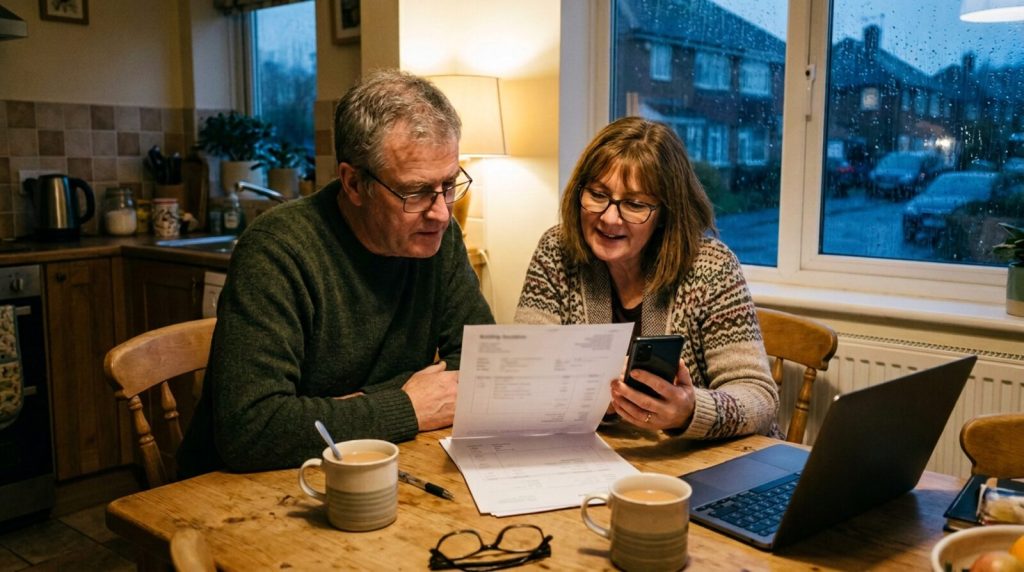
Customers checking their quotations with AI has come up in both of the last two posts: first as a second opinion at the kitchen table, then as Google’s AI phoning trades businesses for prices. This week I want to make it the main subject, because I think it changes what good selling means. What happens when your customer takes your quotation home, uploads it to ChatGPT or Gemini, and asks whether what you are proposing is actually right?
This is not speculation. It is already happening, and some contractors have stopped pretending otherwise. A roofing company in Virginia published a guide on its own website on 4 November 2026 called “Using ChatGPT or Gemini to Review a Contractor Estimate: What the AI Looks For”. It tells homeowners exactly how to upload an estimate, suggests a prompt (“list any red flags, and tell me what’s often left out of writing”), lists the eight things AI tools consistently check, and then does something remarkable: it invites readers to send in the question list the AI gave them, promising to answer every item in writing. In other words, a contractor that is confident in its paperwork is actively encouraging customers to put that paperwork through AI. That is the new bar.
The UK numbers point the same way. A May 2026 study of 967 AI-active UK consumers (by Impact.com, a partnerships platform, so note the sample is people already using AI, not the whole population) found that half now begin a product search with an AI-generated answer, against 28% who start with traditional search results, and 70% said AI had played a role in their online shopping decisions at least sometimes. And Business Pilot’s five-year analysis of its own installer data (published in Glass News in March 2025) shows what that looks like in our industry: between 2019 and 2024, leads to installers fell 22% and average sales fell 16%, but average order values rose 84.5%. Business Pilot’s managing director Elton Boocock describes “a more considered purchasing process”, with homeowners “taking longer to make decisions, gathering more information, and shopping around before committing”. Fewer, better-researched, higher-value customers. Every quote matters more, and every quote is more likely to be checked.
My view: AI levels the playing field, in favour of the professionals
One of the biggest positives of AI and its impact on consumer behaviour is that customers can now much more easily establish whether they have been misled, given incorrect advice or sold a solution that isn’t actually appropriate for the job.
Historically, some builders and contractors have recommended methods that weren’t necessarily the right technical solution, simply because they were cheaper, quicker or more convenient for them (but not the client). Unfortunately, this often resulted in problems further down the line. Customers, meanwhile, would frequently be guided by price, assuming that the cheapest quotation represented the best value.
I think this is where AI is beginning to level the playing field, and potentially in favour of the genuinely professional companies.
Customers can now take a quotation, review the proposed scope of works, upload it to AI and ask whether the specification, methodology and proposed materials are appropriate. They can also compare quotations from different contractors, identify differences in approach and understand why one company might be recommending something different from another.
Personally, I see this as a very positive development for companies that have always done things properly: those that follow the relevant regulations, comply with Building Regulations, use the correct materials and methodologies, and take a professional approach to their work.
In contrast, those who have traditionally relied on cutting corners, offering cheaper but less appropriate solutions, or simply doing what is quickest and easiest may find themselves increasingly exposed.
Ultimately, AI is giving customers access to a level of knowledge and scrutiny that previously might have been beyond them. For professional contractors who have always believed in doing the job properly, I think this represents a real opportunity rather than a threat.
The companies that do things properly may finally find that customers have a much better understanding of why doing things properly matters.
The practical sales implications

The key message is that salespeople need to sell expertise, transparency and confidence, rather than simply price and product.
So, what does all this mean in practical terms for businesses selling into the UK home improvement market?
I think it means that the traditional sales approach needs to evolve. Simply presenting a quotation, explaining the benefits of a product and trying to convince the customer that your price is competitive is no longer enough.
Customers are becoming much better informed, and salespeople need to be prepared for a much greater level of scrutiny.
There are several practical implications:
1. Sell the reasons behind the specification, not just the product.
It is no longer sufficient to tell a customer what you are proposing to install or how you intend to carry out the work. You need to explain why that particular solution is appropriate, what regulations or standards it meets, and why you believe it is the right approach. The technical justification becomes part of the sales proposition.
2. Make quotations more transparent and detailed.
A vague quotation leaves too much room for interpretation and makes it difficult for customers to understand what they are actually buying. A properly structured quotation should clearly identify the scope of works, materials, specifications, installation methodology, compliance requirements and any exclusions. If customers are going to put quotations through AI, make sure yours stands up to scrutiny.
3. Stop competing purely on price.
This is probably one of the biggest implications. If a customer is comparing three quotations, AI can help them understand why one is cheaper than another. The salesperson’s job is to demonstrate whether those differences represent genuine savings or compromises in quality, specification or workmanship. The conversation needs to move away from “Why are you more expensive?” towards “What am I actually getting for my money?”
4. Equip salespeople with better technical knowledge.
Salespeople will increasingly be challenged by customers who have researched the product, installation process and regulatory requirements using AI. This is not necessarily a bad thing. It means salespeople need to understand their products and services in greater depth and be able to explain and justify their recommendations confidently. They cannot simply rely on a well-rehearsed presentation.
5. Use transparency as a competitive advantage.
Rather than being concerned about customers checking your proposals using AI, professional companies should actively welcome it. Explain your methodology, provide supporting technical information, reference relevant standards and regulations, and be open about exactly what is included. The more transparent you are, the easier it becomes for customers to recognise the difference between a professional quotation and one that simply looks cheaper.
6. Change the way sales objections are handled.
When a customer questions a specification or challenges a recommendation based on something AI has told them, the response shouldn’t be defensive. It should be an opportunity to explain the reasoning, provide evidence and demonstrate expertise. AI won’t always have the full context of a particular property or installation, so the professional’s ability to interpret the circumstances and apply practical experience remains extremely valuable.
Meanwhile, the tools are coming for your side of the counter too

One more thing worth saying. While customers are adopting AI to check what you sell them, a wave of AI tools is arriving aimed at you, the business owner. My own social feeds this month have carried ads aimed squarely at window and door companies: free instant-quote widgets for your website, systems that answer every enquiry within thirty seconds and book the appointment, tools that revive old quotations automatically and price small jobs from photographs. Some of these ads are more polished than the products behind them, and I am not recommending any of them. But the direction is unmistakable. The market is pivoting to these tools, on both sides of the sale.
This is the future and it can’t be ignored. But some business owners will still miss it. The owners who do well will be the ones who treat both sides of this shift seriously: customers who check, and tools that answer.
The bigger opportunity
I actually think this could bring about a significant shift in the home improvement sales market.
For many years, companies that cut corners or offered less appropriate solutions could sometimes compete very effectively because customers simply didn’t have the knowledge to distinguish between a good job and a poor one. In many cases, the cheapest quotation won.
AI is beginning to change that dynamic.
The best salespeople and the best companies will increasingly be those who can demonstrate the value of what they are proposing, justify their recommendations and give customers confidence that the work will be done correctly.
In other words, AI may actually make professional selling easier, provided that you genuinely have the expertise and standards to back up what you are selling.
For businesses that have always done things properly, this is an opportunity to differentiate themselves, protect their margins and build greater trust with customers. The challenge is to make sure that their sales processes, quotations and people are ready for a much better-informed consumer.
If you would like a second pair of eyes on how your quotations and sales process will stand up to an AI-checking customer, that is exactly what I help with.
Sources and further reading
- Winchester Roofing (US roofing contractor), “Using ChatGPT or Gemini to Review a Contractor Estimate: What the AI Looks For”, 4 November 2026 (US market).
- DecisionMarketing, “Brits turn to AI for shopping tips ‘yet few buy direct’”, 10 November 2026, reporting Impact.com’s survey of 967 AI-active UK consumers (May 2026).
- Glass News, “A 5-Year Market Analysis from Business Pilot”, 13 March 2025 (Business Pilot installer data, 2019 to 2024).
- On this blog: When the Robot Phones the Office (week two) and AI at the Kitchen Table (week one).